
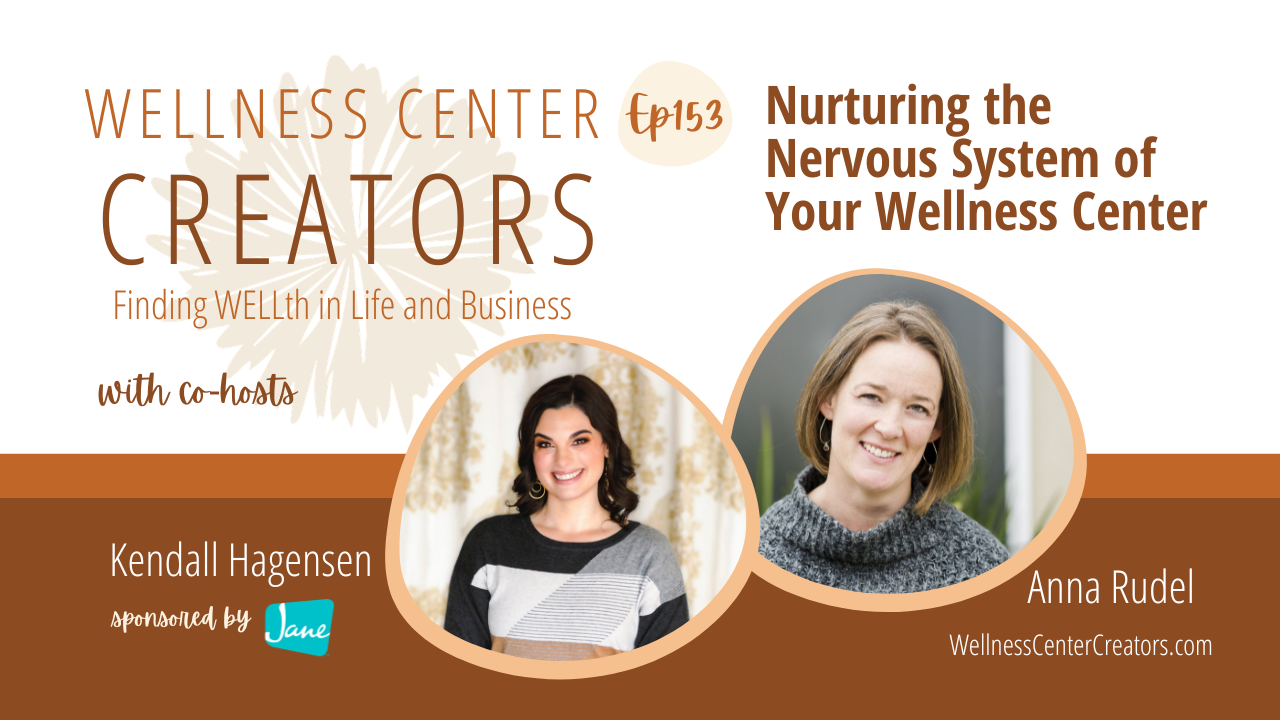
Nurturing the Nervous System of Your Wellness Center
Jun 18, 2026You walk through the door of your clinic. Before anyone says hello, before you check the schedule, before you process a single piece of information—you already know. Something's off. The energy feels different. Tension hangs in the air like static electricity. You can't quite name what happened, but your body registers it instantly.
Your business, Anna and Kendall suggest, has its own nervous system. And in this thoughtful conversation, they explore what that means for leadership, regulation, and the inevitable cycles every wellness center experiences.
The metaphor emerged from lived experience. Kendall recalls noticing it specifically: "After a few months of even having my company, it started to take on a life of its own... I had this felt sense that, oh, this is now going to go beyond my original creation." Anna's experience differed based on how each business began—Kendall built Vancouver Wellness Studio with clear strategic planning, while Anna let Lokahi "evolve very much from within." This contrast reveals how a business's origin story shapes its early nervous system development.
So what does dysregulation actually look like? For Anna, it traces back consistently to one source: "The times when most dysregulation have shown up have been where an employee has felt overburdened or not heard or there has been some sort of miscommunication in the office... it then simmers and resentment builds." For Kendall, similar dynamics emerge, sometimes compounded by personal stress bleeding into professional interactions: "A team member is so dysregulated themselves from a personal event going on... but they're not really realizing how much it's impacting their interactions at work."
The regulation toolkit both hosts describe mirrors clinical practice itself. Kendall explains her approach: "What are the things that we do to regulate ourselves or that we teach patients to do?... Slow down. Take a pause. Think about how do we need to ground this." Key team agreements help prevent dysregulation before it starts—particularly the commitment to "give the benefit of the doubt all the time" and "talk to each other, not about each other."
When dysregulation does occur, both hosts emphasize a similar response: pause, assess, then choose the right intervention. Sometimes that means speeding up to address something immediately. Sometimes it means slowing down because the team has been moving too fast, hiring too many people in quick succession, without adequate breathing room. As Kendall puts it: "Do I need to slow down my pace and revisit what's the common goal?"
Anna's experience reveals another common pattern: team overwhelm stemming from gaps in systems rather than individual failures. "Often the problem can be overwhelm, and it's because they don't have an answer to a question. And that falls on me... it's a hole in the system." This reframes frustration as diagnostic information rather than personal failure—pointing toward systemic solutions rather than blame.
Even after decades in business, Anna maintains healthy skepticism about permanent stability: "Twenty odd years in, when things are going smoothly, I always have a thought... Danger, Will Robinson. A wave is going to come and upset this because it will." This isn't pessimism—it's wisdom. Both hosts agree on expecting the unexpected while still genuinely enjoying calm periods when they occur.
Perhaps the most important insight involves leadership's role in setting tone. Kendall articulates this clearly: "At the end of the day, if we're the ones leading the team... we set the tone for the nervous system... It works so much better to show up and model groundedness and stability." This doesn't mean suppressing authenticity or hiding all struggle—but it does mean recognizing that teams look to leaders for regulatory cues.
The conversation closes with a practical tool many wellness leaders haven't considered: using AI as a regulation aid. As Anna suggests: "When we're personally dysregulated and we receive something that's coming in and we're already overwhelmed, using those tools to take ourselves out of the situation... it can be such a good active listener for ten minutes." This isn't a replacement for human coaching or support—but it offers immediate processing capacity during high-stakes moments requiring quick decisions.
Anna's closing wisdom captures the entire conversation's spirit: "We as humans will always come back to homeostasis. And as a business, we're always trying to get back to that balance. Our job is to guide it." If you've ever walked into your own clinic and immediately felt something was wrong, this episode offers both validation and practical frameworks for understanding and nurturing your business's nervous system.
For information regarding the upcoming retreat, go to: https://www.wellnesscentercreators.com/retreats
Sponsored by Jane App, Jane offers online booking, charting, scheduling, secure video and invoicing on one secure, beautifully designed system: https://jane.app/ Use code wellness1mo for a one-month grace period on your new Jane account.
About Anna Rudel
Anna Rudel, L. Ac is the owner and founder of Lokahi Acupuncture Clinic in San Jose California, founded in 2003. Anna is a master organizer and clinician, and as a Coach she specializes in working with Clinic Owners in the state of California, and Acupuncturists and Acupuncture Clinic Owners, or groups wanting to add Acupuncture worldwide, as well as teams that need support with employee retention and satisfaction. Born in the UK, Anna has traveled extensively in Asia and now has a thriving multi-practitioner clinic in the US!
Anna's Website and Links
- Website: https://lokahiacupuncture.com/
- Learn Group Coaching: https://www.wellnesscentercreators.com/group-coaching
- For info about Individual Coaching: https://www.wellnesscentercreators.com/individual-coaching
About Kendall Hagensen
Kendall is a Somatic Mental Health Therapist, Multidisciplinary Clinic Owner and Business Coach. She specializes in, and is passionate about, working with healthcare professionals to create the businesses of their dreams. Big goals always have a psychological component beneath the surface, so Kendall uses her background in Somatic Psychotherapy and EMDR Therapy mixed with Business Coaching tools to help clients develop a healthy relationship with their business and their strength as a leader.
As someone who lives with a chronic illness herself, Kendall feels that health happens best within community, which is why she takes a holistic, integrative, and collaborative wellness approach to her personal and professional life.
Kendall’s Web/Social Links