
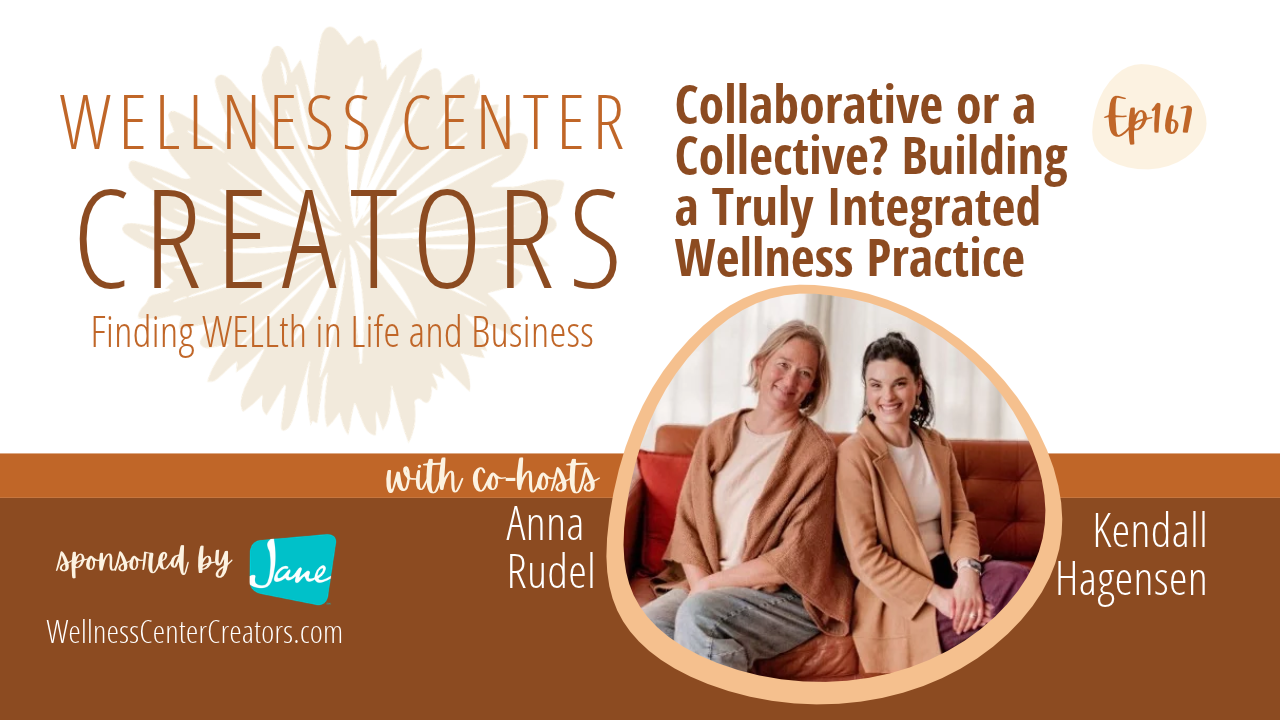
Collaborative or a Collective? Building a Truly Integrated Wellness Practice
Nov 05, 2026A seasoned lead therapist is stuck. A new patient is hard to conceptualize, and nothing about the case is clicking. So the therapist brings it to the team, and one of the doctors, who is also an acupuncturist, ends up giving a mini in-service on a specific form of homeopathy used for perplexing presentations. The therapist had never really heard of it. Now there's a new tool for the patient, and a learning moment for everyone.
That's what Kendall Hagensen calls a truly collaborative practice, and it's the heart of this episode of the Wellness Center Creators podcast. Kendall and Anna Rudel unpack the difference between a collective model, where providers share space, and a collaborative care model, where a team works together under one brand. Anna jokes that Kendall has brought her soapbox, and Kendall happily admits she will preach about this all day.
Kendall starts with the collective. Providers share an address, might offer multiple disciplines, and may even put everyone's bio on the website. They might refer down the hallway and build real relationships. She calls it a wonderful offering to the community, with a few things to know. One is corporate practice of medicine: if you market a team under one brand but they aren't actually under one brand, you may be out of compliance, something she learned years later when the law changed in her state. Another is that a collective makes you a landlord. Tenants may disrespect your space, so vet them and ask for references, and Kendall says the common mistake she sees, and made herself, was not charging enough rent in the beginning.
Then comes the collaborative model. Kendall explains that it typically means one brand and an employee structure rather than contractors, because if you want people practicing and communicating a certain way, a contractor model is hard to maintain. At its core, she says, it comes down to relationships. Providers need to know each other as people, what each other treats, their philosophy of care, who they love working with, and when to refer. Systems make that possible: case consultation, coordination, team meetings, internal referrals, and shared documentation. Most important is protected time. Kendall's team has held a 90-minute weekly staff meeting at the same time, on the same day, since day one, and it's protected the way a patient session is.
It's harder than it sounds, which is why it isn't more common. Anna notes that some people are natural collaborators and some aren't, and Kendall adds the challenges of professional languages, scopes of practice, philosophies, HIPAA, and compensation for collaborative work. Then there's ego and hierarchy. From day one, she told her team this is not a hierarchical, competitive multidisciplinary team, and that a symptom can find relief through psychotherapy, naturopathic medicine, acupuncture, or massage. Leveling the playing field starts with hiring the right people, and the leader has to model it all the time.
Anna shares what this looks like in her company. When massage was added more recently, its office across the parking lot created natural distance, so the challenge is helping everyone understand who each other is and encouraging referrals. The acupuncturists are naturally collaborative. Massage therapists, Anna notes, don't always see themselves as healthcare providers, and Kendall says that has been the biggest piece of education in her company too.
Kendall says she'll go much deeper on all of this at the retreat, and Anna is bringing her massage and acupuncture clinical leads to dive in.
The takeaway: the patient should feel the difference, and so should the team. Even if a patient sees just one provider, they receive the energy of the whole collaborative effort. Kendall closes by inviting listeners to share their stories of collaboration and the questions they're working on.
And for information Bloom and Grow Monthly Mastermind Groups, go to: https://www.wellnesscentercreators.com/group-coaching
Sponsored by Jane App, Jane offers online booking, charting, scheduling, secure video and invoicing on one secure, beautifully designed system: https://jane.app/ Use code wellness1mo for a one-month grace period on your new Jane account.
About Anna Rudel
Anna Rudel, L. Ac is the owner and founder of Lokahi Acupuncture Clinic in San Jose California, founded in 2003. Anna is a master organizer and clinician, and as a Coach she specializes in working with Clinic Owners in the state of California, and Acupuncturists and Acupuncture Clinic Owners, or groups wanting to add Acupuncture worldwide, as well as teams that need support with employee retention and satisfaction. Born in the UK, Anna has traveled extensively in Asia and now has a thriving multi-practitioner clinic in the US!
Anna's Website and Links
- Website: https://lokahiacupuncture.com/
- Learn Group Coaching: https://www.wellnesscentercreators.com/group-coaching
- For info about Individual Coaching: https://www.wellnesscentercreators.com/individual-coaching
About Kendall Hagensen
Kendall is a Somatic Mental Health Therapist, Multidisciplinary Clinic Owner and Business Coach. She specializes in, and is passionate about, working with healthcare professionals to create the businesses of their dreams. Big goals always have a psychological component beneath the surface, so Kendall uses her background in Somatic Psychotherapy and EMDR Therapy mixed with Business Coaching tools to help clients develop a healthy relationship with their business and their strength as a leader.
As someone who lives with a chronic illness herself, Kendall feels that health happens best within community, which is why she takes a holistic, integrative, and collaborative wellness approach to her personal and professional life.
Kendall’s Web/Social Links